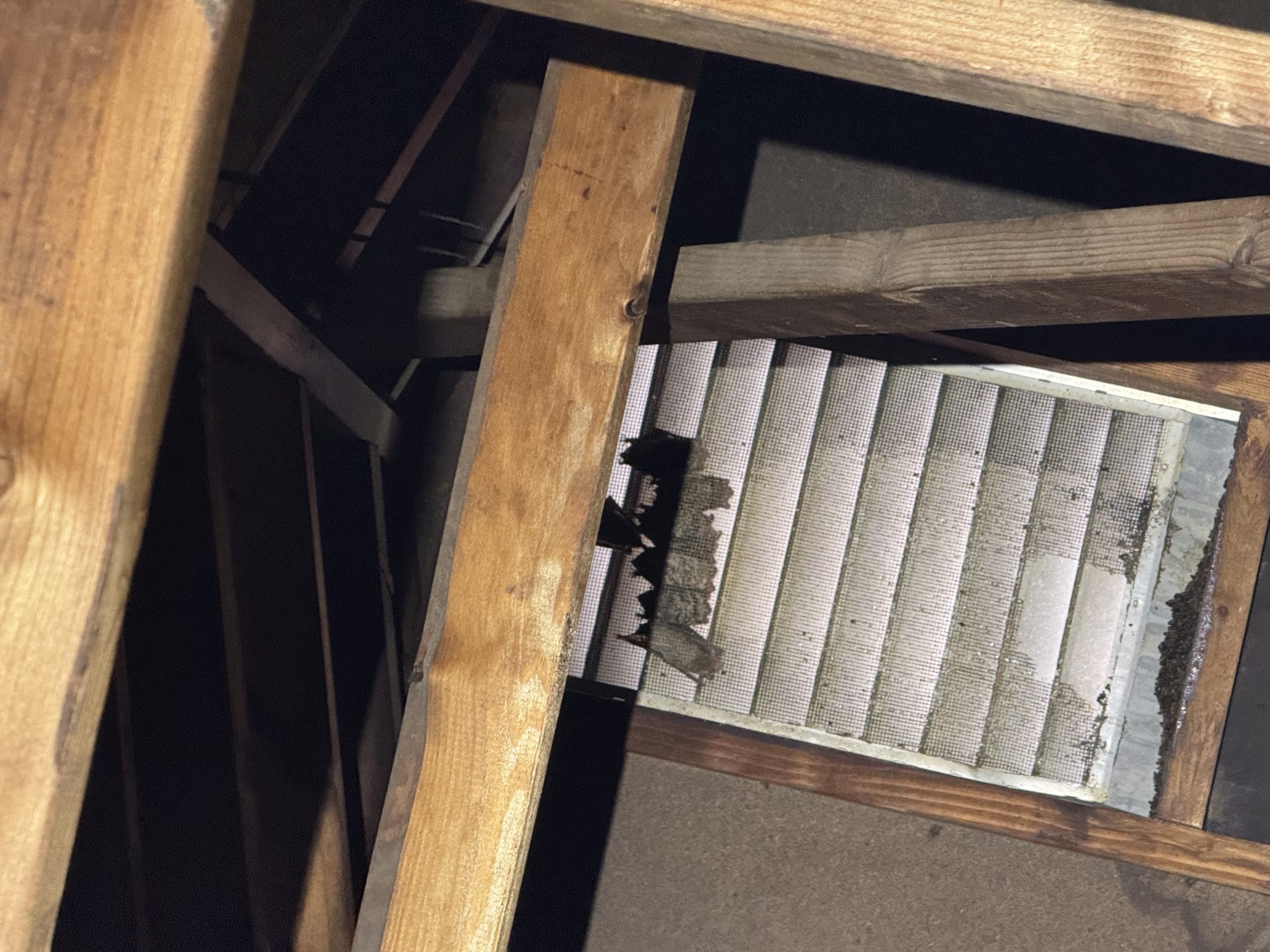
If you have heard scratching after dark, found bat droppings on a windowsill, or noticed bats circling near the roofline, the problem is already telling you something. Bats often enter through small gaps around vents, roof edges, chimneys, and other openings that homeowners may never notice at first.
Evict A Pest Wildlife and Pest Control helps homeowners throughout Cincinnati, OH address bat problems with a removal plan built around exclusion, source correction, and prevention. If bats are roosting where they should not be, the next step is to identify how they are getting inside and close those access points so the colony does not return.
Bat signs
Bats can stay hidden for a while, so the earliest signs are often subtle. Homeowners usually notice the problem through sounds, stains, droppings, or a strong odor near the attic, soffit, or upper walls.
- Scratching or light fluttering at dusk: Movement overhead after sunset often points to bats leaving a roost.
- Droppings below roof openings: Small, crumbly droppings near an attic access point or exterior wall are a common clue.
- Dark staining near entry points: Grease marks can build up where bats repeatedly enter and exit.
- Ammonia-like odor: A strong smell can develop when droppings and urine collect in a confined space.
- Bats seen near the roofline: Repeated flight activity around one area can suggest an established entry route.
Even one sign can mean more bats are present than you think. A quick look from the ground is not always enough, since bats may use narrow gaps that are easy to overlook from outside.
What causes entry
Bats do not need a large opening to get inside. They often use tiny gaps and weak spots in the exterior where materials have separated, shifted, or worn down over time. The goal is not just to move bats out of the space. The goal is to find the access route and correct it.
Common access points
We often look at the places where a home naturally creates small openings.
- Roof edges and trim: Loose flashing, gaps at the eaves, and separated trim can create an easy path.
- Vent openings: Attic and roof vents may be vulnerable if screens or coverings are damaged.
- Chimney areas: Gaps around chimney structures can give bats a quiet place to enter and roost.
- Wall transitions: Any seam where materials meet can widen enough for bats to squeeze through.
Because bats can squeeze through very small spaces, a homeowner may not spot the source right away. That is why a removal plan should account for both the animals and the structural opening they are using.
Our removal approach
Evict A Pest Wildlife and Pest Control takes a practical approach that focuses on the source of the issue. Rather than relying on ongoing service plans, we work to remove the bats from the structure, close the openings they used, and reduce the chance of a repeat problem.
How we handle it
- Find the entry route: We look for the openings, staining, droppings, and travel paths that point to bat access.
- Remove the active problem: The process is designed to address the bats currently using the structure.
- Seal the weak points: Once the activity is addressed, we focus on exclusion and repairs where needed.
- Reduce attraction: Habitat corrections and practical recommendations can help make the property less inviting.
This approach fits our philosophy as an independent local company. We are focused on solving the issue, not turning it into a recurring subscription. For many homeowners, that difference matters just as much as the removal itself.
Why exclusion matters
If bats are removed but the openings remain, the same roost can become a repeat problem. Exclusion is the step that turns a temporary fix into a lasting one. It is the part that closes off the route bats used and helps keep new animals from taking the same path.
Exclusion is especially important because bat access points are often small and easy to miss. A proper plan considers where bats entered, where they moved once inside, and which exterior gaps need attention. Without that follow-up, homeowners may keep hearing the same noises season after season.
What exclusion can involve
- Closing gaps around roof edges and trim
- Addressing openings near vents or chimney areas
- Repairing vulnerable points that support repeat access
- Helping homeowners understand what to watch for after the work is finished
Rodenticide-free care
Evict A Pest Wildlife and Pest Control is rodenticide-free, which matters for homeowners who want wildlife handled with less risk to pets, predators, and other non-target animals. While bat work is different from mouse or rat control, our broader approach reflects the same principle: use methods that address the actual source instead of depending on poison or shortcuts.
When bats are involved, the safer and smarter path is usually removal plus exclusion, not chemical quick fixes. That keeps the focus on solving the structural problem that allowed the animals to enter.
After the bats leave
Once the bats are no longer active at the entry points, the home still needs attention. Droppings, odor, and contaminated areas can continue to bother the space even after the animals are gone. The cleanup needs may vary based on where the bats were roosting and how long they were present.
Homeowners often want to know what to watch for after bat removal work is done. A few simple habits can help you stay ahead of a repeat issue:
- Check upper exterior areas after heavy weather or seasonal changes
- Watch for new staining around vents, trim, and roof edges
- Notice fresh droppings under eaves or attic access points
- Listen for unusual movement at dusk or dawn
If you are unsure whether a sound or stain is connected to bats, it is worth having it checked before the activity grows.
Local service area
Bat problems do not stay confined to one property type or one part of the city. In Cincinnati, OH, we help homeowners address bat activity and the entry points that allow it. We also serve nearby communities including Madeira, Hyde Park, Indian Hill, Montgomery, Blue Ash, Mariemont, Terrace Park, Loveland, Milford, and Mason.
Whether you are hearing movement overhead, spotting droppings, or seeing bats near the roofline, the right response is to identify the route and seal it before more animals settle in.
Common questions
How do I know bats are in my home?
Common signs include scratching at dusk, droppings near roof openings, dark staining around entry points, and a strong odor in attic or upper wall spaces.
Where do bats usually get inside?
They often use small gaps around roof edges, vents, chimneys, trim, and other exterior seams that are easy to miss from the ground.
Can one small opening matter?
Yes. Bats can fit through very small spaces, so even a narrow gap may be enough for repeated access.
Why is exclusion so important?
Exclusion closes the route bats used, which helps prevent the same colony from returning through the same opening.
What if I still hear sounds after removal?
Lingering sounds may point to another entry point, remaining droppings, or a separate wildlife issue. It is worth having the area checked again.
Does a bat problem always stay in the attic?
No. Bats may roost in attic spaces, wall voids, or other sheltered areas where they can stay quiet and hidden for long periods.
Take the next step
If bats are making noise overhead or leaving signs around your home, Evict A Pest Wildlife and Pest Control can help you move from uncertainty to a clear plan. We focus on bat removal that addresses the source, closes the openings, and helps protect the property from repeat activity.
Call
+15132278769 to discuss bat removal for your Cincinnati, OH home and get started with a practical solution.