Scratching in the attic, droppings near entry points, torn insulation, or a smell that keeps getting stronger usually means wildlife has already found a way inside. When that happens, the goal is not just to move one animal out. It is to find how it got there, what it damaged, and how to keep it from coming back.
Evict A Pest Wildlife and Pest Control handles Wildlife removal & Control for homes across Cincinnati, OH with a source-first approach. We look for the entry point, the conditions attracting the animal, and the repairs or exclusions needed to close things off for the long haul. Whenever possible, we rely on exclusion, repairs, trapping, habitat correction, and other lasting solutions rather than recurring service plans.
Signs wildlife is present
Wildlife activity can start quietly and then turn into a much bigger problem. Many homeowners first notice the sound, then the damage, then the odor or mess. The earlier you catch it, the easier it is to limit what gets torn up or contaminated.
- Odd noises: Scratching, thumping, chewing, or movement in walls, crawlspaces, or attic areas.
- Droppings: Small pellets, piles near access points, or waste hidden along beams and insulation.
- Damage to materials: Torn insulation, damaged vents, gnawed wood, shredded nesting material, or disturbed soffits.
- Strong odors: Musky smells, ammonia-like odors, or a decaying smell that does not go away.
- Entry clues: Gaps, loose flashing, damaged screens, or openings around utility penetrations.
If you have noticed one or more of these signs at your Cincinnati, OH property, the safest next step is a focused inspection and a removal plan built around the animal type and the access point.
How we solve it
Wildlife control works best when the source is addressed, not just the symptom. That means identifying what is inside, where it is moving, why it chose the structure, and what needs to be sealed or repaired after removal.
- Inspect the structure: We look for tracks, droppings, nesting areas, access points, and damage that points to the species involved.
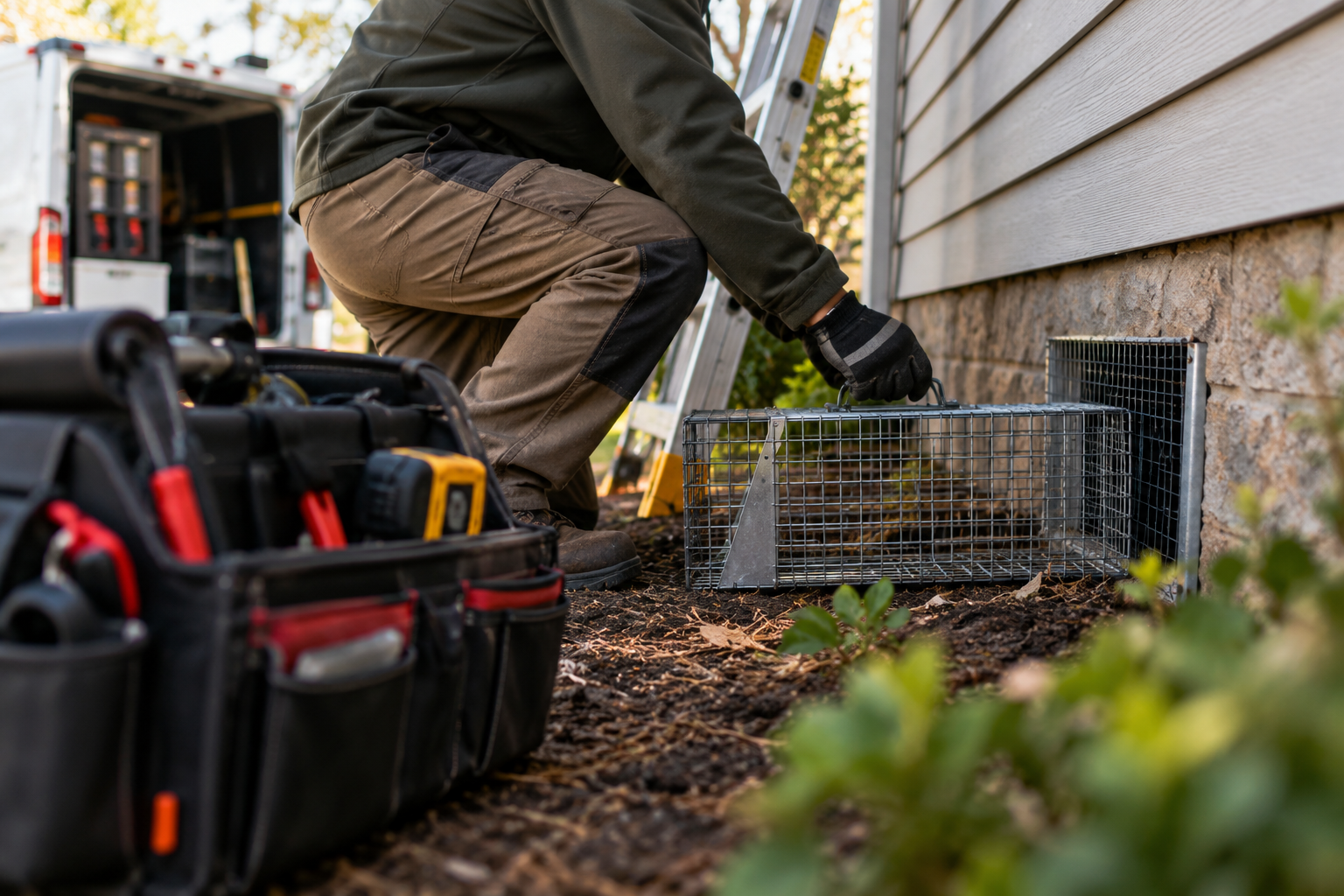
- Remove the animal: Based on the situation, we use humane trapping or other appropriate removal methods for the wildlife present.
- Seal and exclude: We close off openings and reinforce vulnerable areas so the same animal, or others, cannot re-enter easily.
- Address the attractant: Habitat correction can make the property less inviting by reducing shelter, food sources, and hiding places.
- Check the aftermath: We review the affected area so you understand what was involved and what should be watched next.
This approach is especially important when wildlife has had time to settle in. The longer an animal stays, the more likely it is to damage insulation, wiring, vents, and interior surfaces.
Animals we handle
Different animals leave different clues, and each one needs a removal plan that fits its behavior. A squirrel entry is not handled the same way as a raccoon den site or a bat issue near the upper roofline.
Bats and attic access
Bats often enter through small gaps that are easy to miss from the ground. We focus on identifying openings, blocking re-entry, and removing the source without creating new problems for the home.
Squirrels and roof gaps
Squirrels can fit through surprisingly small openings and often leave evidence near vents, fascia, and roof transitions. Their activity can lead to noise, shredded nesting material, and damage around access points.
Raccoons, skunks, and groundhogs
These animals can create more visible disturbance around porches, decks, crawlspaces, sheds, and landscape edges. We look at entry paths, shelter spots, and the conditions that made the property attractive.
Mice, rats, and other nuisance wildlife
Rodent control is handled without rodenticide as part of our programs. We rely on source-focused methods that reduce risk to pets, wildlife, and predators while targeting the reason rodents are getting inside.
Why source-first matters
Many wildlife problems come back when the opening is left alone or when the structure still offers the same shelter and access. A short-term fix can leave the door open for another round of animal activity.
We use a source-first process because it gives the property a better chance at lasting results. That can include sealing openings, repairing damaged areas, removing nesting material, and correcting conditions that made the home appealing in the first place.
- Less repeat activity: Closing entry points lowers the odds of the same issue showing up again.
- Less property damage: Fast action helps limit chewing, tearing, contamination, and odor.
- Cleaner resolution: A full plan addresses the animal, the access, and the conditions behind the problem.
Evict A Pest Wildlife and Pest Control is one of the few remaining independent local companies serving Cincinnati, OH with that kind of approach. We are not focused on keeping customers tied to ongoing subscriptions. We are focused on fixing the problem at its source.
What to expect
Homeowners often want to know how a wildlife service visit moves from concern to resolution. The process should feel clear, not confusing.
- Start with the symptoms: Tell us what you heard, saw, or smelled and where it seemed concentrated.
- Locate the source: We inspect the likely access zones and affected areas.
- Choose the method: The removal plan depends on the species, the structure, and the type of activity present.
- Plan the follow-up work: Exclusion and repairs are often the key to lasting control.
- Move toward prevention: We point out changes that can reduce future attraction and access.
That structure keeps the work practical. You should know what is happening, why it is happening, and what needs to be done to keep the home from becoming a target again.
Prevention steps
After wildlife is removed, the next step is keeping the same conditions from bringing it back. Small maintenance habits and exterior changes can make a noticeable difference.
- Seal gaps and openings: Check roof edges, vents, soffits, and utility entries for weaknesses.
- Trim shelter zones: Reduce dense cover close to the home where animals can hide or travel.
- Store attractants carefully: Keep pet food, trash, and similar items from drawing wildlife near the structure.
- Watch for repeated noise: Early signs are easier to handle than a full nesting situation.
- Repair damage quickly: Small openings can become active entry points fast.
Prevention is not about making the property perfect. It is about removing the easy opportunities that wildlife uses to get inside or settle nearby.
Local service area
We provide Wildlife removal & Control for Cincinnati, OH and surrounding communities such as Madeira, Hyde Park, Indian Hill, Montgomery, Blue Ash, Mariemont, Terrace Park, Loveland, Milford, and Mason. If wildlife has gotten into a residence, outbuilding, attic, crawlspace, or other part of the property, we can help evaluate the problem and move toward a lasting solution.
Every property is a little different, and the access point is not always where the activity appears loudest. That is why a careful inspection matters. It helps connect the noise, odor, droppings, or damage to the actual source.
Common questions
What animals do you most often remove?
We frequently handle bats, squirrels, raccoons, skunks, groundhogs, mice, rats, opossums, birds, and snakes, depending on the property and the signs present.
Do you focus only on removing the animal?
No. We also look at exclusion, repairs, trapping, and habitat correction so the same issue is less likely to return.
Why is rodenticide not part of your rodent control approach?
We do not use rodent poisons in our mouse and rat control programs. We prefer methods that reduce unnecessary risk to pets, wildlife, and predators while still targeting the source of the problem.
What should I do before a visit?
Make note of where the sounds, droppings, odors, or visible damage are concentrated. If possible, avoid disturbing nesting areas or sealing openings before the source is identified.
Can wildlife damage more than just insulation?
Yes. Depending on the species, wildlife can damage vents, roof edges, wiring, duct areas, wood, and contaminated surfaces around the entry zone.
How do I know whether the problem is still active?
Fresh noise, new droppings, continued odor, and ongoing damage are all signs that wildlife may still be present or moving through the structure.
Call for help
If wildlife is making noise, leaving waste, or getting back into your property, it is time to address the source. Evict A Pest Wildlife and Pest Control helps homeowners in Cincinnati, OH with practical Wildlife removal & Control that aims for a lasting fix instead of a temporary patch. Call
+15132278769 to discuss what you are seeing and what should happen next.