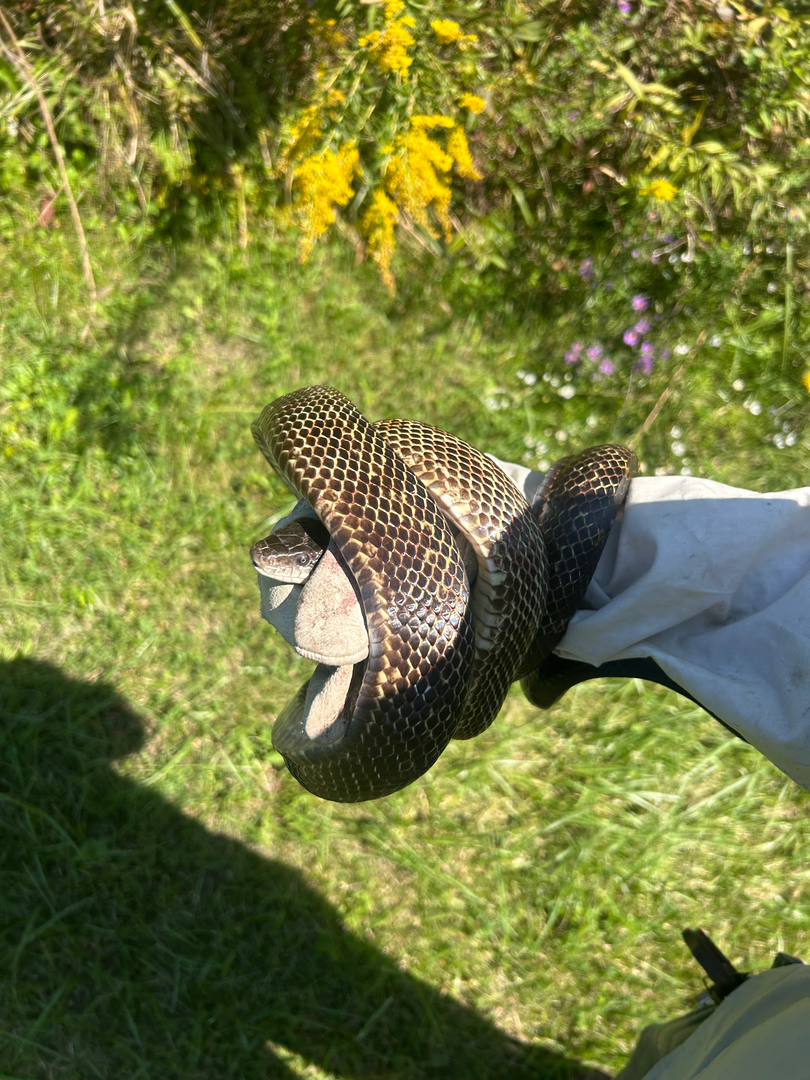
A snake near the house can turn a normal day into a stressful one fast. Maybe you saw one by the foundation, near a garage door, around a yard edge, or tucked where it could disappear before you got a clear look. When that happens, the safest next step is to keep people and pets back and have the situation checked by a local specialist who knows how to remove it without making the problem worse.
Evict A Pest Wildlife and Pest Control helps homeowners across Cincinnati, OH deal with snake concerns by finding out why the snake was there, removing it carefully, and addressing the conditions that may draw more wildlife close to the home. We focus on source-based solutions that fit the situation, not temporary fixes that leave the same issue waiting to return.
Snake warning signs
Not every snake sighting means a snake has settled near your home, but several signs can point to a repeat problem. If you notice one of the signs below, it is worth taking it seriously.
- Repeated sightings: A snake appears more than once near the same area, especially along the same wall, shed, or yard edge.
- Fresh sheds: Shed skin near stored items, mulch, brush, or foundation edges can signal recent activity.
- Hidden movement: Quick motion in tall grass, debris piles, or crawl-space openings may suggest a snake is using cover.
- Food source activity: Rodent signs or frog and insect activity can attract snakes looking for prey.
- Safe shelter spots: Gaps under porches, wood piles, dense landscaping, and cluttered storage areas can give snakes places to rest.
If a snake was seen once and has not returned, the issue may be limited. If sightings keep happening, it often means the property offers food, cover, or access points that need attention.
How we handle removal
Snake removal should be calm, careful, and based on what the snake is actually doing. Evict A Pest Wildlife and Pest Control starts by looking at the area, identifying likely entry or hiding spots, and deciding the safest way to remove the animal while reducing the chance of another visit.
On-site assessment
We look for signs that help explain how the snake got there, where it may be hiding, and what conditions made the area attractive. That often includes checking around foundations, stored materials, crawl-space openings, yard edges, and other sheltered spots.
Careful removal
Once the situation is understood, we use a removal approach suited to the property and the animal’s location. The goal is to take away the immediate concern without creating unnecessary disturbance that could push the snake deeper into the property or make it harder to locate.
Source correction
After removal, we look at the conditions that may have drawn it close. That may involve exclusion work, minor repairs, trapping where appropriate for nearby wildlife issues, or habitat correction that reduces shelter and food access.
Why snakes appear
Snakes usually show up for a reason. A yard or structure that offers food, cover, or a quiet path inside can make a property more appealing than the surrounding area. Understanding that pattern matters, because simply removing one snake does not explain why it was there.
- Food nearby: Rodents, insects, frogs, and other small prey can attract snakes to a property.
- Hiding places: Brush piles, stacked materials, dense ground cover, and clutter can create shelter.
- Access gaps: Openings near utility penetrations, worn vents, or loose exterior details can give wildlife a way through.
- Low disturbance areas: Quiet corners around sheds, crawl spaces, and yard edges often become resting spots.
Snakes are not usually trying to cause trouble. They are following conditions that make sense to them. The fix is to change those conditions so the property is less inviting.
Prevention steps
Good snake control starts with reducing what brings them close. A homeowner can do a lot by improving the outdoor environment and removing the places that make snakes comfortable.
- Trim thick vegetation: Keep grass cut and reduce dense growth near the home.
- Clear yard clutter: Move wood piles, unused materials, and stored items away from the structure when possible.
- Limit hiding spots: Reduce brush, leaf piles, and debris where snakes can rest unseen.
- Watch for prey activity: If you notice rodent signs, address them quickly since prey can draw snakes close.
- Seal access points: Close gaps and openings that may let wildlife move under or into the structure.
- Manage shelter areas: Keep areas around porches, sheds, and foundation edges easier to inspect.
Prevention does not need to be complicated. Small changes can make a property far less attractive to snakes and to the smaller animals that attract them.
What to do first
If you spot a snake, the priority is safety. Keep children and pets away, and do not try to grab or corner the animal. Even a nonvenomous snake can react quickly when it feels trapped.
- Step back: Give the snake space and avoid sudden movement.
- Watch from a distance: If you can do so safely, note where it went and whether it disappeared into a gap, brush pile, or structure opening.
- Do not use tools: Poking, trapping by hand, or trying to move it without a plan can make the situation harder.
- Call for help: A trained removal service can inspect the area and decide what action makes sense.
If the snake was seen near a house opening, storage area, or another sheltered place, the location itself becomes part of the problem. That is why source control matters as much as removal.
Local service area
We provide snake removal for Cincinnati, OH and nearby communities, including Madeira, Hyde Park, Indian Hill, Montgomery, Blue Ash, Mariemont, Terrace Park, Loveland, Milford, and Mason. If snake activity is showing up around a home, shed, yard edge, or other outdoor space, we can help assess what is happening and what should change next.
Evict A Pest Wildlife and Pest Control is local, independent, and focused on long-term solutions rather than ongoing subscriptions. Our work often overlaps with wildlife exclusion, rodent control, and habitat correction, which matters because snake problems are often tied to the same conditions that draw other wildlife close.
How we work
Homeowners usually want a straightforward process and clear next steps. That is how we approach snake removal from start to finish.
- Listen to the sighting details: Where the snake was seen, how often it has appeared, and what nearby areas may be involved.
- Inspect the property: We look for access points, shelter, prey signs, and conditions that may be supporting the issue.
- Remove the immediate concern: We take the right action for the snake and the setting.
- Address the source: We recommend practical changes that reduce the chance of another visit.
- Plan the next step: If the property needs exclusion, repairs, or habitat correction, we explain what matters most first.
This approach helps avoid repeated frustration. A snake removal call should do more than clear one sighting. It should point toward the real reason the animal was there.
Common questions
How do I know whether the snake is still nearby?
If the snake disappeared quickly, it may be hiding under cover, inside a gap, or moving through an area that offers shelter. Repeated sightings, shed skin, or movement near the same spot suggest it may still be using the property.
Can a snake come back after removal?
Yes, if the same food sources, hiding spots, or access points remain. That is why we look at the setting around the sighting and not just the animal itself.
What makes a yard attractive to snakes?
Snakes are drawn to shelter and prey. Tall vegetation, clutter, brush piles, and rodent activity can make a property more appealing than it should be.
Should I seal every opening I find?
Not blindly. It helps to identify which openings are actually relevant to the issue and which ones are part of a larger wildlife pattern. A focused inspection keeps the work practical.
Do snakes always mean there is a rodent problem?
Not always, but rodent activity is a common reason snakes stay near homes. If rodents are present, that can become part of the solution plan.
What should I do if I find shed skin?
Note the location and avoid disturbing the area more than needed. Shed skin can help point to a hiding area or travel route, which is useful during inspection.
Get help now
If you have seen a snake around your property in Cincinnati, OH, do not wait for another surprise sighting. The fastest path forward is to address the current snake and the conditions that brought it there.
Call Evict A Pest Wildlife and Pest Control at +15132278769 to discuss what you saw and arrange next steps for snake removal and prevention.