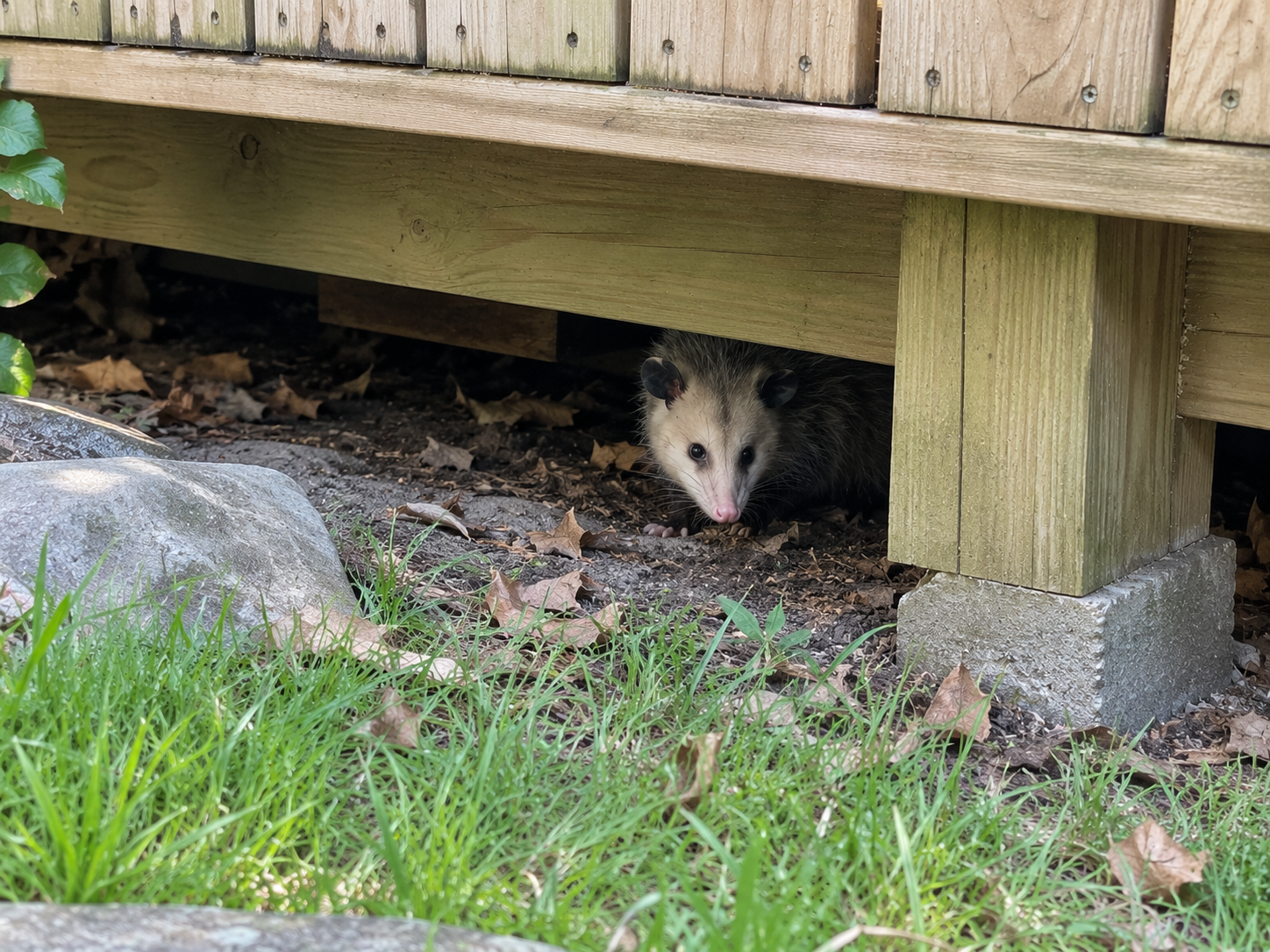
If you keep seeing a bulky gray animal near the trash, under the deck, or moving across the yard after dark, an opossum may have settled close to your home. Scratching beneath a porch, tipped bins, scattered pet food, and a strong musky odor are all signs that the problem is getting established.
Evict A Pest Wildlife and Pest Control helps homeowners in Cincinnati, OH handle opossum removal with a focus on the source of the problem, not just the animal you happened to spot. We look at how the opossum is getting access, what is attracting it, and which exclusion or repair steps can help keep it from coming back.
Opossum trouble signs
Opossums are nocturnal, so many homeowners do not notice them right away. By the time the signs are obvious, the animal may already be using a crawl space, porch, shed, or storage area as a regular stop.
- Late-night noise: Heavy movement, shuffling, or scratching after dark often points to an animal using a sheltered space.
- Disturbed trash: Open bags, torn lids, and scattered food scraps can mean an opossum has found an easy meal.
- Pet food theft: Bowls left outside overnight are a strong attraction.
- Odor: A musky smell near an entry point or den area may develop when an animal lingers too long.
- Droppings or tracks: Fresh sign near fences, decks, and foundation edges can help confirm activity.
One sighting does not always mean a den site, but repeated sign usually means the animal has learned where food and shelter are available.
What brings them close
Opossums do not usually pick a property at random. They settle where food, cover, and easy travel routes line up. Once those conditions exist, the same animal may return night after night.
Food sources
Pet food, fallen fruit, unsecured garbage, compost, and spilled bird seed can all keep an opossum close to the home. Even small amounts of food can be enough to encourage repeat visits.
Shelter spots
Porches, sheds, deck spaces, and openings around structures offer protection from weather and predators. If a gap is available, an opossum will often test it.
Easy access
Branches, stacked materials, low fencing, and open access points can make it easier for wildlife to move through a property. When movement is simple, the animal is more likely to stay.
Our removal approach
When we handle opossum removal, we start by learning where the animal is entering and what is drawing it back. Evict A Pest Wildlife and Pest Control uses a practical process that aims to solve the condition around the wildlife activity, not just the symptom.
- Find the access: We look for the entry route, travel pattern, and shelter areas the animal is using.
- Assess the attractant: We identify food sources, hiding places, and conditions that are making the property appealing.
- Remove and exclude: When possible, we use removal methods paired with exclusion and repairs so the same opening is not used again.
- Reduce repeat activity: We help correct the conditions that keep wildlife coming back, such as easy access or unsecured attractants.
This approach is useful because opossums are opportunistic. If one issue is left open, another animal may follow the same path later.
Why exclusion matters
Many wildlife calls are not only about the animal itself. The bigger issue is often the gap, opening, or habit that allowed the animal to settle there. That is why exclusion and repair work are often central to a lasting solution.
For opossum problems, exclusion can mean sealing access routes, closing off den areas after removal, and making the site less welcoming. It may also include trimming back access points, fixing weak spots, or addressing features that let the animal move freely around the home.
Evict A Pest Wildlife and Pest Control focuses on source-based work because it helps reduce the chance of seeing the same pattern again.
Common problem areas
Opossums do not need much space to cause trouble, and some of the most common hiding places are easy to overlook until the signs become obvious.
Under porches
Open voids under porches and decks can provide shade, cover, and a quiet place to rest. If an opening exists, an opossum may begin using it regularly.
Near trash storage
Trash cans, recycling bins, and loose refuse are reliable food sources. When lids do not close tightly, the problem often grows quickly.
Near pet areas
Outdoor pet feeding spots can bring wildlife close to the house. Even if the food is gone by morning, the animal may already have learned the routine.
Along fences and edges
Fencing, planting borders, and storage piles can create hidden travel lanes. Opossums often choose routes that keep them near cover.
How to respond
If you suspect an opossum problem, simple cleanup is a good first step, but it usually is not enough on its own. The goal is to make the property less attractive while the removal and exclusion plan is put together.
- Bring in pet food at night.
- Keep trash lids closed tightly.
- Pick up fallen fruit and spilled seed.
- Reduce clutter near porches, sheds, and decks.
- Avoid blocking a suspected den opening before checking whether an animal is inside.
If the animal is already established, a rushed fix can trap the wrong issue in place or leave the access route open for another visit. A careful approach saves time later.
Why this service helps
Opossums can create more than a nuisance. Their presence can lead to noise, mess, odor, and repeated visits by other animals that notice the same food and shelter. A single animal may also reveal a bigger access problem around the structure.
Professional opossum removal is useful because it combines removal with practical corrections. That matters when a homeowner wants more than a temporary interruption. It also matters for families who prefer rodenticide-free wildlife work and a method that focuses on exclusion, trapping, and habitat correction instead of shortcuts.
We serve Cincinnati, OH with this same straightforward approach, and we also help nearby communities such as Madeira, Hyde Park, Indian Hill, Montgomery, Blue Ash, Mariemont, Terrace Park, Loveland, Milford, and Mason.
Common questions
How do I know it is an opossum?
Look for nighttime activity, a slow waddling shape, tipped garbage, and noise near porches or other sheltered spaces. Fresh tracks, droppings, or a musky odor can also point to opossum activity.
Will an opossum stay only for a few nights?
Sometimes an animal passes through briefly, but if food and shelter remain available, it may return repeatedly. Repeat sightings usually mean the conditions are still favorable.
Can I move the animal myself?
That is usually not a good idea. Opossums can react unpredictably when cornered, and a property may have a hidden access point that still needs attention after the animal leaves.
What if the opossum is under a porch?
That often means there is a usable opening that should be assessed before it becomes a regular den site. The access point, shelter, and surrounding attractants all matter.
Why do opossums keep coming back?
They return to places that offer easy food, cover, or both. If the property still provides those conditions, the behavior can repeat even after the animal is gone.
What makes your approach different?
We focus on the reason the animal chose the property and work to correct it at the source. That usually means removal paired with exclusion, repairs, trapping, and habitat correction rather than ongoing service subscriptions.
Schedule service
If you are dealing with an opossum around your home in Cincinnati, OH, contact Evict A Pest Wildlife and Pest Control at
+15132278769 to discuss the problem and the next step. We will help you figure out where the animal is getting access and what needs to be corrected so the issue does not keep repeating.