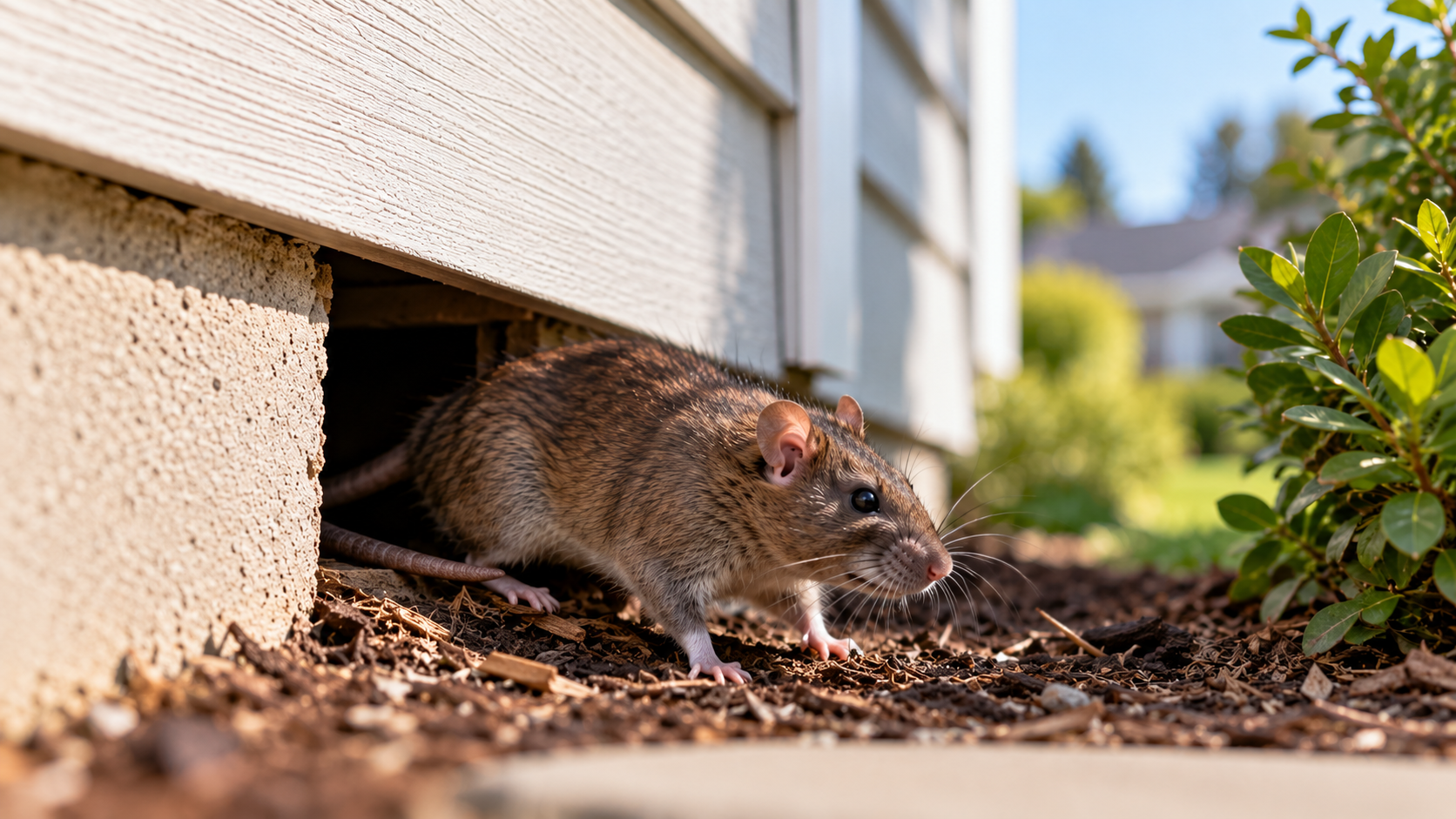
Scratching at night, droppings near stored items, and a sharp musky odor are all signs rats may have settled inside your Cincinnati, OH home. If you are hearing movement behind walls, noticing chewed materials, or finding new droppings day after day, the problem is usually larger than one visible rat.
Evict A Pest Wildlife and Pest Control starts by finding where rats are entering, what is attracting them, and which nesting areas need attention. From there, we focus on exclusion, habitat correction, trapping, and repairs that help stop the cycle instead of covering it up with temporary fixes.
Rat warning signs
Rats do not always stay out in the open, so the first clues are often subtle. The sooner you connect the signs, the easier it is to limit damage and cut off access points before the activity spreads.
- Droppings: Small, dark pellets near walls, cabinets, basements, attics, garages, or storage areas.
- Gnaw marks: Chewed wood, plastic, wiring insulation, food packaging, or insulation materials.
- Grease trails: Oily rub marks along routes rats use repeatedly.
- Noises: Scratching, scurrying, or light thumping after dark.
- Odors: A strong ammonia-like smell from urine or nesting activity.
- Nesting debris: Shredded paper, fabric, or insulation gathered into tucked-away spaces.
Rats are cautious, but they leave patterns. If you keep seeing the same signs in the same places, the activity is likely ongoing and needs a closer look.
Where rats get inside
Rats need only a small opening to move indoors, and once they find a route, they tend to reuse it. A thorough rat control plan depends on identifying the exact access points rather than assuming the problem is only inside the house.
Common entry spots
We often find access around utility penetrations, gaps where materials meet, damaged vent openings, openings near doors, and other small voids that are easy to overlook. These openings may be low to the ground or hidden where several building materials come together.
Attraction sources
Food crumbs, pet food, unsecured trash, accessible bird seed, and cluttered storage areas can all make a property more appealing. Rats also take advantage of nesting material and protected hiding places, so interior clutter and exterior cover matter just as much as food access.
Why sealing matters
If entry points stay open, rats can keep returning even after trapping or cleanup. Exclusion is one of the most important parts of lasting control because it helps close the door on repeated infestation.
Our control approach
Evict A Pest Wildlife and Pest Control handles rat removal with a practical process designed to solve the source of the issue. We are rodenticide-free, so we do not use rodent poisons as part of mouse and rat control programs. That approach supports safer decision-making around pets, wildlife, and predators while focusing on direct control methods.
- Inspection: We look for signs of rat travel, nesting, feeding, and entry points.
- Trapping: We use trapping strategies based on where the rats are active and how they are moving.
- Exclusion: We seal or reinforce openings that rats are using to enter or travel between areas.
- Repairs: When needed, we address damage that is making access easier.
- Habitat correction: We help reduce the conditions that keep drawing rats back.
This kind of work is not about keeping someone on a recurring service plan. It is about reducing the active problem, correcting the causes, and making the property harder for rats to use again.
What trapping solves
Trapping is often needed when rats are already inside walls, attics, basements, or other concealed spaces. It can reduce activity faster than waiting for the problem to fade, and it gives a clearer picture of where the rats are traveling.
When traps help most
Trapping is useful when there is active movement, fresh droppings, or repeated sightings. It is also helpful after exclusion work begins, because sealing exterior openings can help concentrate activity toward the places where traps are set.
Why placement matters
Rats follow edges, hidden routes, and protected paths. Trap placement should match that behavior rather than being scattered randomly. The right setup depends on signs, structure, and the specific places rats are using most.
What homeowners can avoid
DIY trapping often misses the main runways or places traps where rats avoid them. That can waste time and leave the infestation active. If the pattern is not clear, professional setup can save a lot of frustration.
Exclusion and repairs
Exclusion is the part of rat control that helps turn a short-term fix into a lasting one. Without it, rats can keep finding the same weak points and reenter after traps are removed.
- Sealing gaps: Closing openings where rats can squeeze through.
- Reinforcing weak areas: Addressing spots rats can chew or widen.
- Protecting vents and penetrations: Reducing access through vulnerable exterior features.
- Cleaning up attractants: Removing nesting materials and reducing easy food sources.
- Improving storage habits: Limiting clutter that gives rats cover.
In many homes, the biggest improvement comes from combining removal with physical barriers and simple habit changes. That combination makes the property far less inviting and makes repeat activity less likely.
Homes we help
Rat activity can show up in many parts of a property, and the warning signs are not always where people expect them. We help homeowners across Cincinnati, OH when rats are tied to indoor activity, storage areas, attic spaces, crawlspaces, garages, or exterior nesting spots that lead back toward the house.
We also serve nearby communities including Madeira, Hyde Park, Indian Hill, Montgomery, Blue Ash, Mariemont, Terrace Park, Loveland, Milford, and Mason. The location may change, but the goal stays the same: identify the source, remove the rats, and help keep the property from becoming an easy target again.
Why local matters
Rat problems are not all the same, which is why a local company can be useful. As one of the remaining independent companies serving the area, Evict A Pest Wildlife and Pest Control keeps the work focused on what is actually happening at the property rather than pushing one fixed approach for every situation.
That matters when a homeowner wants a direct answer. Is the problem a gap in the structure? A nesting area? A food source? An overlooked opening? The right plan depends on the answer, not a script. Local service should feel specific, practical, and aimed at solving the issue at its source.
What to do next
If you are seeing rat signs now, do not wait for the pattern to spread. Start by limiting food access, reducing clutter, and avoiding anything that may disturb hidden nesting areas before the property is inspected.
- Record the signs: Note where you found droppings, noises, or damage.
- Limit attractants: Store food securely and remove easy access to pet food or trash.
- Watch repeat paths: Rats often use the same routes, so repeated signs matter.
- Schedule an evaluation: Get the entry points, nesting areas, and activity sources identified.
If you need rat removal and control in Cincinnati, OH, contact Evict A Pest Wildlife and Pest Control at +15132278769. We are open Monday 08:00 to 18:00, Tuesday through Thursday 08:00 to 19:00, Friday 08:00 to 17:00, and Saturday 10:00 to 14:00.
Common questions
How do I know if rats are inside the walls?
Scratching at night, repeated movement sounds, and fresh droppings near the same areas are common signs. A strong odor or visible gnaw marks nearby can also point to wall activity.
Do rats usually come back after removal?
They can, especially if openings remain unsealed or attractants stay available. That is why removal works best when paired with exclusion and habitat correction.
Are poisons used for rat control here?
No. Rat control is rodenticide-free, so poisons are not part of the program. The focus is on trapping, exclusion, and practical prevention steps.
What should I do before a visit?
Try not to block access to the areas where you are seeing signs. If possible, note the times and places you hear or see activity so the inspection can start with the most likely travel routes.
Can rats damage more than food and insulation?
Yes. Rats can chew wiring, wood, plastic, and other materials, and that damage may create bigger repair needs over time. Early control can reduce how far the problem spreads.
Will cleanup alone fix the problem?
Cleanup helps, but it will not stop rats if they are still entering or nesting nearby. The property needs source control, exclusion, and reduced attractants to make a lasting difference.