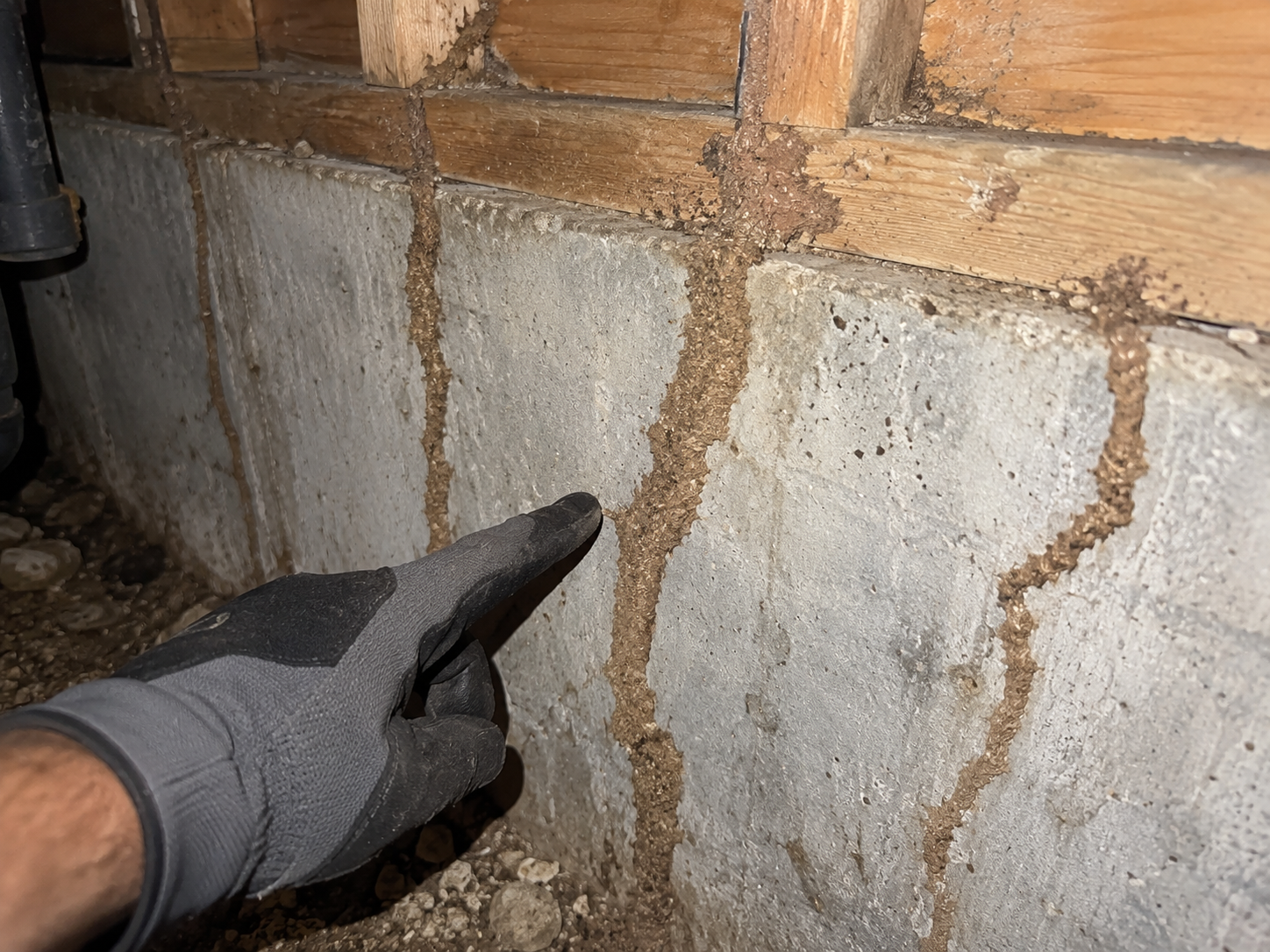
Soft wood, bubbling paint, hollow-sounding trim, or tiny wings near windows can all point to a termite problem. If those signs are showing up at your Cincinnati, OH home, the safest next step is to get the source identified before the damage spreads farther.
Evict A Pest Wildlife and Pest Control handles termite treatment with a focus on solving the problem at its source, not on locking you into ongoing service plans. We look for where termites are entering, where activity is concentrated, and what needs to be corrected so the home has a better chance of staying protected after treatment.
Signs to watch
Termites are easy to miss at first because the most serious damage often starts behind wood, trim, flooring, or wall surfaces. Homeowners usually notice a change in the look or sound of affected areas before they see the insects themselves.
- Hollow wood: Tapping on trim, baseboards, or beams sounds thin or empty.
- Blistered surfaces: Paint or wood may bubble, peel, or look damaged from the inside out.
- Mud tubes: Pencil-sized earthen tunnels may appear along foundations or other hidden routes.
- Loose doors or windows: Frames can shift or swell where termites have been feeding nearby.
- Discarded wings: Small wings around sills, lights, or vents can point to swarm activity.
- Frass or debris: Some termite species leave small pellets or bits of material near active wood.
If you are seeing more than one of these signs, it is worth having the property evaluated sooner rather than later. Termites are not a problem that usually stays small on its own.
How termites spread
Termites survive by staying close to moisture, wood, and hidden pathways. Once they find a way inside, they can keep feeding for a long time without drawing attention. The goal is not just to treat the insects you can see, but to interrupt how they are entering and moving through the structure.
Common entry points
Termites often take advantage of areas where wood, soil, or moisture meet. Even small gaps can be enough for them to stay out of sight while they build activity.
Why hidden damage matters
The insects may be active well before visible damage becomes obvious. That is why a close look at wood contact points, crawl areas, trim, and other vulnerable spots matters so much during termite treatment.
In Cincinnati, OH, a termite issue should be handled with both treatment and source correction whenever possible. Otherwise, the same access points can continue to invite activity later.
Our treatment approach
We start by learning what the homeowner has noticed, then we inspect the areas where termites are most likely to be feeding or traveling. From there, the treatment plan is built around the property itself, not a one-size-fits-all script.
- Inspection of the problem area: We look for evidence of termite activity, damage patterns, and likely entry points.
- Source-focused treatment: We apply methods aimed at the active problem rather than just masking the symptoms.
- Correction of contributing conditions: When possible, we address repairs, exclusion, or moisture-related conditions that may be helping termites persist.
- Follow-up guidance: You get clear next steps for protecting wood, reducing risk, and watching for new signs.
That approach fits homeowners who want termite treatment that makes sense long term. Instead of treating the same problem over and over, we focus on what is allowing it to happen.
Wood damage repair
Termite treatment often needs to be paired with practical repair work. Termites do not just leave behind insects. They can weaken the parts of the home that need to stay solid.
Where damage shows up
We commonly see damage at baseboards, trim, support wood, framing edges, window surrounds, and other areas where wood stays hidden long enough for activity to build.
Why repair matters
Even after termites are removed, damaged wood can remain vulnerable if it is left in place without correction. Repairs help close off access points and remove compromised material so the issue does not linger.
When a homeowner calls us for termite treatment, we are also looking at what helped the problem take hold. That can include gaps, decay, or other conditions that need attention after the active termites are addressed.
What affects treatment
Not every termite problem looks the same. The size of the infestation, where it started, and how much damage has already occurred all shape the work that needs to be done.
- Location of activity: Termites feeding in trim are handled differently than termites deeper in framing.
- Access to affected wood: Some areas are easier to treat and inspect than others.
- Amount of damage: Heavy feeding may require more extensive correction after treatment.
- Moisture sources: Conditions that support termite activity can influence how long-term the solution can be.
- Species behavior: Different termite types can leave different signs and require different treatment strategies.
This is one reason a careful inspection matters. The more accurately the problem is identified, the more targeted the solution can be.
Why people call us
Evict A Pest Wildlife and Pest Control serves homeowners who want a straightforward answer and a practical plan. We are an independent local company, and that matters to people who do not want a sales pitch built around recurring subscriptions.
Our termite treatment service is designed around lasting results whenever possible. We look for the source, address the activity, and help reduce the conditions that allowed it to develop. If a home has other pest or wildlife concerns too, we can help sort out those issues as part of a broader property protection approach.
We also keep our service style clear and direct. You will know what the signs mean, what needs to happen next, and what the homeowner can do to reduce the chance of repeat activity.
After treatment
Once termite activity has been addressed, the goal is to keep the home harder to access and easier to monitor. Good follow-through makes a difference, especially for homeowners who want to avoid future surprises.
- Watch the same areas: Keep an eye on trim, sill plates, baseboards, and other spots where activity was found.
- Control moisture: Fix leaks, drainage problems, or damp conditions that invite wood-destroying pests.
- Keep wood clear of soil: Stored lumber, mulch, or other wood material should not rest against the structure.
- Check for new signs: Wings, tubes, soft wood, or fresh debris should be treated as a reason to recheck the area.
For homes in Cincinnati, OH, the smartest termite treatment plan is one that pairs active removal with practical prevention. That gives the homeowner a clearer path forward than chasing the same signs year after year.
Common questions
How do I know if it is termites or carpenter ants?
Termites and carpenter ants can both show up around damaged wood, but the signs are different. Termites often leave mud tubes, hollow wood, or discarded wings, while carpenter ants more often leave sawdust-like debris and visible insect trails.
Can termites damage a house quietly?
Yes. They often feed behind walls, under flooring, or inside structural wood long before the problem becomes obvious. That is why small clues like bubbling paint or hollow wood should not be ignored.
What parts of a home do termites target first?
They usually focus on wood that stays damp, hidden, or in contact with soil. Trim, framing, sill areas, and other protected wood surfaces are common trouble spots.
Do termite signs always mean active termites?
Not always, but signs should be checked right away. Old damage, abandoned tubes, or past activity can look similar to current activity, and a close inspection helps tell the difference.
Can termite treatment help protect other wood areas too?
It can, especially when treatment is paired with repairs and exclusion work. The goal is to address the active problem and reduce the conditions that make other wood vulnerable.
What should I do before a termite visit?
Clear access to the areas where signs were noticed, note any changes you have seen, and avoid covering up damaged spots before the inspection. The more visible the problem area is, the easier it is to assess.
Request a visit
If you suspect termite activity at your Cincinnati, OH home, do not wait for the damage to spread. Call
Evict A Pest Wildlife and Pest Control at
+15132278769 to talk through the signs and set up termite treatment that focuses on the source, the damage, and the next step toward protecting your home.