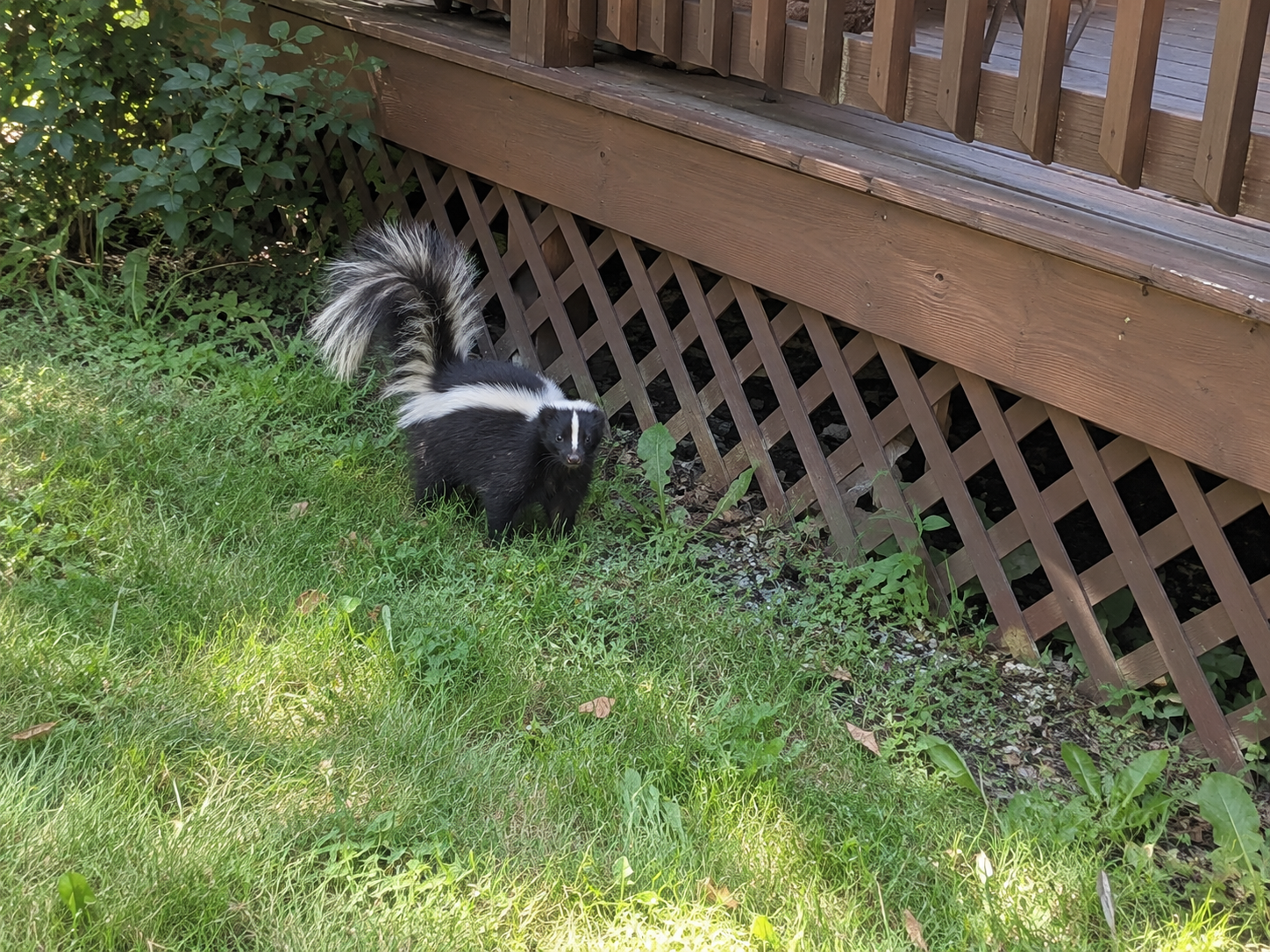
A skunk under a deck, shed, or porch can turn a quiet night into a stressful one fast. The smell is hard to ignore, and digging, denning, or repeated visits can leave your yard, pets, and family on edge.
If you are seeing fresh holes, hearing movement after dark, or catching that sharp odor near a structure, the next step is to have the situation assessed and handled at the source.
Evict A Pest Wildlife and Pest Control helps homeowners across Cincinnati, OH remove skunks and close off the access that brought them there.
Skunk trouble signs
Skunks are often noticed only after the evidence becomes obvious. They stay low, move slowly, and like covered spots where they can burrow or den without much disturbance. A few common signs can point to a skunk problem before you ever see the animal clearly.
- Strong musky odor near a deck, porch, crawl space, or garage edge
- Fresh holes or disturbed soil beside structures and walkways
- Loose lattice, torn openings, or gaps under sheds and porches
- Noisy movement at night, especially near hidden areas
- Pet interest around a specific spot outdoors
- Repeated digging around a foundation, flower bed, or retaining edge
Skunks may also be drawn by food sources, sheltered space, or easy access beneath structures. Once they settle in, the problem can grow from one animal to a den site with repeated activity.
What attracts skunks
Removing a skunk only solves part of the problem if the same conditions remain. We start by identifying what made the property attractive and what needs to change so the animal does not come back to the same spot.
Shelter
Skunks like protected places with limited traffic. Low openings beneath porches, sheds, additions, and decks can become ideal den sites when the space is quiet and easy to enter.
Food access
Outdoor pet food, uncovered trash, fallen fruit, bird seed, and other easy food sources can increase nighttime activity around a home. Even if the skunk is not feeding on your property every night, the scent of food can keep it returning.
Cover and clutter
Dense brush, stacked materials, and overgrown edges create concealment. Skunks prefer travel routes where they can move with less exposure, so habitat correction can make a difference.
Our removal approach
Skunk removal should focus on more than getting the animal out of sight.
Evict A Pest Wildlife and Pest Control uses a practical process built around locating the access point, removing the animal, and reducing the chances of a repeat problem.
- Inspect the activity
We look for signs of entry, digging, and den use around the structure and nearby landscape.
- Identify the source
We determine where the skunk is entering, what is drawing it there, and how the area should be addressed.
- Remove and exclude
When removal is needed, we use methods suited to the situation and then close off access with exclusion work and repairs whenever possible.
- Correct the conditions
We recommend habitat changes and other practical steps that reduce repeat activity.
Our focus is on long-term solutions rather than ongoing service plans that keep a problem circling back. We also work rodenticide-free for our mouse and rat programs, which reflects the same careful approach we bring to wildlife work: solve the source, reduce unnecessary risk, and avoid shortcuts that create new problems.
Odor and damage
Even when a skunk is not spraying, the odor can linger around the area where it spent time. If a skunk has sprayed near a porch, under a deck, or close to a doorway, the smell may hang around and keep returning until the activity is addressed and the area is cleaned as needed.
Digging damage is another common concern. Skunks often scratch or excavate around entry points while looking for shelter or insects. That can leave loose soil, undermined edges, and openings large enough for other wildlife to explore.
Why odor matters
Odor is more than a nuisance. It often points to where the animal has been active, which helps narrow down the den site or travel route. It can also make pets and people more likely to avoid outdoor spaces that should be usable.
Why damage matters
Small openings become bigger problems quickly. If a skunk can get under a structure, so can other nuisance wildlife. Addressing the damage early helps keep the issue from becoming broader and harder to manage.
What we check
Skunk work often begins with a close look at the places most likely to hide activity. The goal is to trace the problem back to its source rather than treat only what is visible above ground.
- Edges beneath decks, porches, and sheds
- Openings around additions and utility gaps
- Loose soil, burrows, and digging patterns
- Spaces behind stored items or outdoor clutter
- Yard features that create cover or access
- Signs that the animal is passing through versus nesting
That inspection helps determine whether the situation calls for removal, exclusion, repairs, or a mix of several steps. In many cases, the most important fix is closing the access point after the animal is removed.
Keeping them out
Once skunks are gone, prevention matters just as much as removal. A property that still offers shelter and easy access can invite another animal later.
Seal entry points
Openings beneath structures, broken screens, loose trim, and gaps near the base of a building can all create an invitation. Closing those access points is often one of the most effective ways to reduce repeat activity.
Cut down cover
Trim back thick growth, clear clutter, and keep storage from creating hidden denning areas. The more visible and open a space is, the less attractive it is for wildlife that prefers concealed routes.
Reduce attractants
Store food securely, manage trash carefully, and limit other sources that can pull wildlife toward the property. A few small changes can make your yard less appealing after removal is complete.
Cincinnati service areas
We provide skunk removal for homeowners throughout Cincinnati, OH and nearby communities, including Madeira, Hyde Park, Indian Hill, Montgomery, Blue Ash, Mariemont, Terrace Park, Loveland, Milford, and Mason. If you are dealing with digging, odor, or a den under a structure, we can help determine what is happening and what should be done next.
Evict A Pest Wildlife and Pest Control is locally owned, independent, and focused on practical solutions that do not rely on unnecessary subscriptions. For skunk issues, that means addressing the animal, the access point, and the conditions that allowed the problem to start.
Common questions
How do I know it is a skunk?
The strongest clues are the odor, nighttime activity, and digging near covered areas. You may also notice a low, cautious animal moving along the edge of a structure or yard.
Will a skunk leave on its own?
Sometimes a skunk passes through, but a den site under a structure usually does not solve itself. If the area offers shelter and access, the animal may stay or return.
Can I block the opening right away?
Not always. If a skunk is still inside, sealing it too soon can trap the animal and create a bigger problem. The right sequence is important.
Why does the smell linger?
Skunk odor can remain on surfaces, soil, and nearby materials after an encounter. The smell often points to where activity has been concentrated.
What if the skunk keeps digging the same spot?
Repeated digging usually means the site still offers shelter or access. That is a sign to inspect the area closely and address both the opening and the conditions around it.
Can skunk problems affect pets?
Yes. Pets may investigate den sites or cross paths with a skunk outdoors. Keeping pets away from active areas helps reduce the chance of a bad encounter.