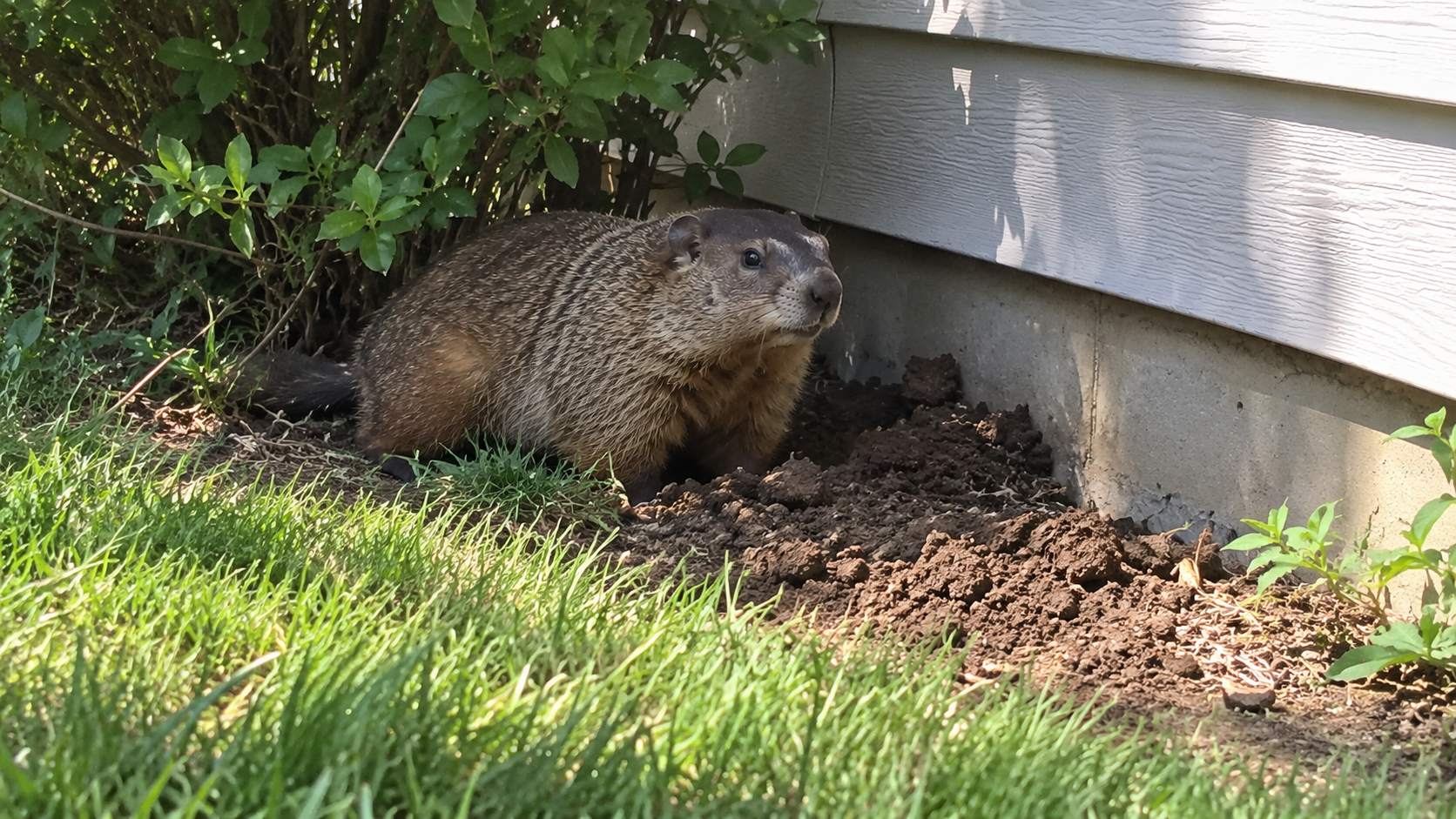
Fresh burrows under a shed, porch, or retaining wall can turn into a bigger headache fast. Groundhogs dig deep, widen openings over time, and leave loose soil, chewed plants, and unsettling holes that keep expanding around your yard.
If you are seeing repeated digging or a bulky animal disappearing under a structure, Evict A Pest Wildlife and Pest Control can help with groundhog removal in Cincinnati, OH. We focus on finding the source of the problem, removing the animal when possible, and closing off the conditions that let it settle back in.
Groundhog warning signs
Groundhogs are easy to overlook at first because the damage often starts small. The earlier you identify the pattern, the easier it is to keep the burrow from becoming a long-term problem.
- Large burrow openings: Groundhog holes are usually wider than the burrows left by many small rodents.
- Mounded dirt: Excavated soil often forms a fan or pile near the entrance.
- Chewed garden plants: They feed on leaves, stems, and vegetables close to the ground.
- Repeated sightings: A groundhog that returns to the same area usually has an active den nearby.
- Burrowing near structures: Openings near foundations, porches, sheds, or retaining walls deserve attention.
One hole may not seem serious, but active digging can undermine soil and create weak spots around outdoor structures. When that happens, waiting usually gives the animal more time to expand the den and reinforce the path back underground.
What brings them back
Groundhogs choose locations that offer cover, food, and easy digging. A yard that feels calm to a homeowner can be ideal shelter for a burrowing animal. Once the den is established, the area may keep attracting the same groundhog or another one looking for a ready-made spot.
Cover and concealment
Brush piles, dense plant growth, and clutter along the edge of a yard can make a burrow feel safer. Groundhogs prefer areas where they can move quickly between the opening and nearby cover.
Food sources
Gardens, fallen fruit, tender plants, and easy access to vegetation can keep a groundhog close. If food is nearby, the animal does not have to travel far from its burrow.
Soft digging areas
Loose soil, slopes, and spaces under structures are easier to excavate. These spots often become repeat problem areas because the animal can enlarge them with less effort.
How we handle it
Evict A Pest Wildlife and Pest Control approaches groundhog removal with the goal of solving the burrow issue, not simply pushing the animal from one spot to another. We look at where it is entering, where it is feeding, and what conditions are making the area attractive.
- Inspect the activity: We look for active burrows, travel paths, and signs of fresh digging.
- Identify the source: We trace the problem back to the den location and surrounding conditions.
- Remove the animal when possible: We use methods suited to the situation and the site.
- Address access points: We focus on exclusion and repairs that help keep the burrow from being reused.
- Reduce attractants: We may suggest habitat correction steps that make the property less appealing.
We are a local company that keeps the work practical and direct. That means paying attention to the burrow itself, the structures around it, and the reasons the animal chose that spot.
Damage to watch
Groundhogs are not just a nuisance because they dig. Their burrows can create several problems that may grow worse as time passes.
- Undermined soil: Tunnels can weaken the ground around patios, walkways, and support areas.
- Burrow expansion: What starts as one hole can become a larger den with multiple openings.
- Garden loss: Vegetation may be eaten down quickly, especially near the den.
- Repeated digging: If one opening is closed without addressing the animal, another may appear nearby.
- Persistent yard disruption: Loose dirt, mounds, and worn paths can make the space harder to use.
When the activity is close to a structure, the concern is not only the animal itself. The burrowing pattern can affect the area around it, which is why source control matters more than surface cleanup.
Exclusion and repairs
Groundhog removal works best when it is paired with exclusion and repairs. If the entry area stays attractive or accessible, the same problem can return. We focus on closing off the setup that allowed the burrow to develop.
Burrow area closure
After the active animal is dealt with, the opening and surrounding soil may need to be stabilized or closed in a way that discourages reuse. This step helps break the cycle of repeat digging.
Structure protection
Open ground under sheds, porches, and similar areas may need barriers or repair work. A groundhog will often seek out protected space where digging is easier and less exposed.
Site cleanup
Removing attractants around the property can make the space less inviting. That may include trimming back growth, reducing clutter, and paying attention to recurring food sources.
Our goal is a lasting solution whenever possible, not a setup that keeps pulling you back into the same problem month after month.
What Cincinnati homeowners notice
In Cincinnati, OH, many calls about groundhog removal start with the same concern: a hole that keeps getting bigger or a den that appears along the edge of a yard. Homeowners often spot the issue after noticing fresh dirt, missing plants, or repeated movement near the same opening.
If you are unsure whether the burrow is active, a few clear clues can help:
- Fresh, loose soil at the entrance
- Repeated use of the same hole
- Plant damage near the burrow
- Tracks or movement at dawn or dusk
- New holes appearing close to the original one
These signs do not need to be dramatic to matter. Groundhogs are persistent diggers, and a small opening can become a broader burrow system before it gets much attention.
Why our approach differs
Evict A Pest Wildlife and Pest Control is one of the few remaining independent local companies in an industry that has become crowded with large chains and franchises. We keep the focus on the problem at hand and the practical steps that solve it.
We are rodenticide-free in our mouse and rat work, and that same careful mindset carries into our wildlife services. With groundhogs, the goal is to remove the animal, correct the conditions, and reduce the chance of a repeat den without leaning on broad ongoing plans that do not match the situation.
That approach fits homeowners who want the issue handled directly, with clear attention to the burrow, the damage, and the property around it.
Common questions
How do I know if the burrow is active?
Fresh soil, repeated digging, and recent sightings near the opening usually point to active use. If the hole looks worn and there is new dirt nearby, it deserves attention.
Can a groundhog burrow near a shed or porch?
Yes. Groundhogs often choose sheltered spaces close to structures because those spots offer cover and easier digging.
Will closing one hole solve the problem?
Not always. If the animal is still present or the surrounding conditions remain attractive, it may dig another opening nearby.
What areas of the yard should I check first?
Look along fence lines, brushy edges, garden beds, low slopes, and the ground around sheds, porches, and retaining walls.
What if the groundhog keeps coming back?
That usually means the burrow area still offers food, cover, or easy access. A longer-term solution needs exclusion, repairs, and habitat correction.
Do groundhogs only cause burrow damage?
No. They also eat vegetation and can leave a yard looking torn up with fresh digging, mounds of soil, and repeated openings.
Schedule service
If a groundhog is digging up your yard or settling near a structure, Evict A Pest Wildlife and Pest Control can help with removal and exclusion in Cincinnati, OH. We work to identify why the burrow started, address the active problem, and help keep the site from becoming a repeat target.
Call
+15132278769 during our business hours to discuss the signs you are seeing and the next step for your property.