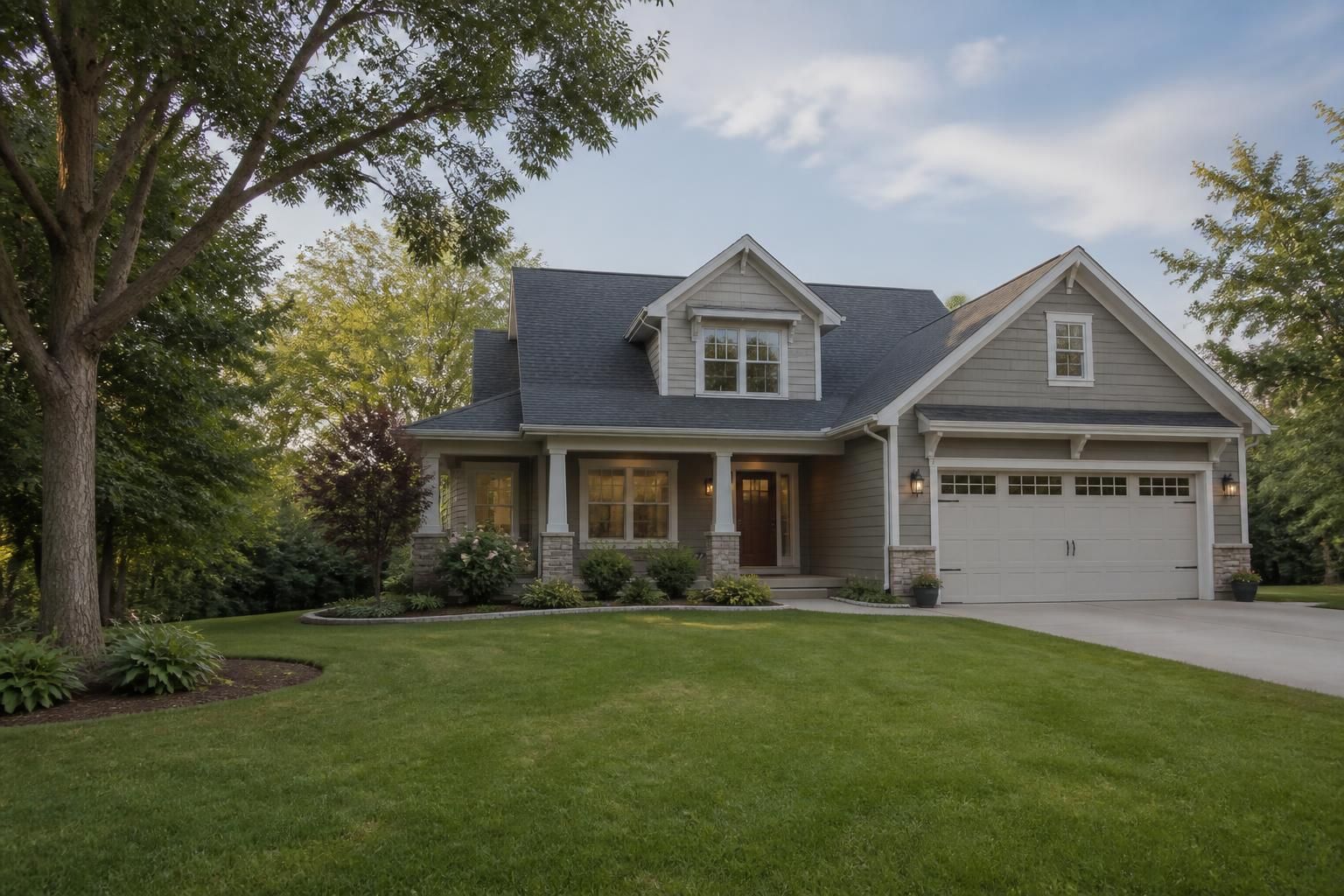
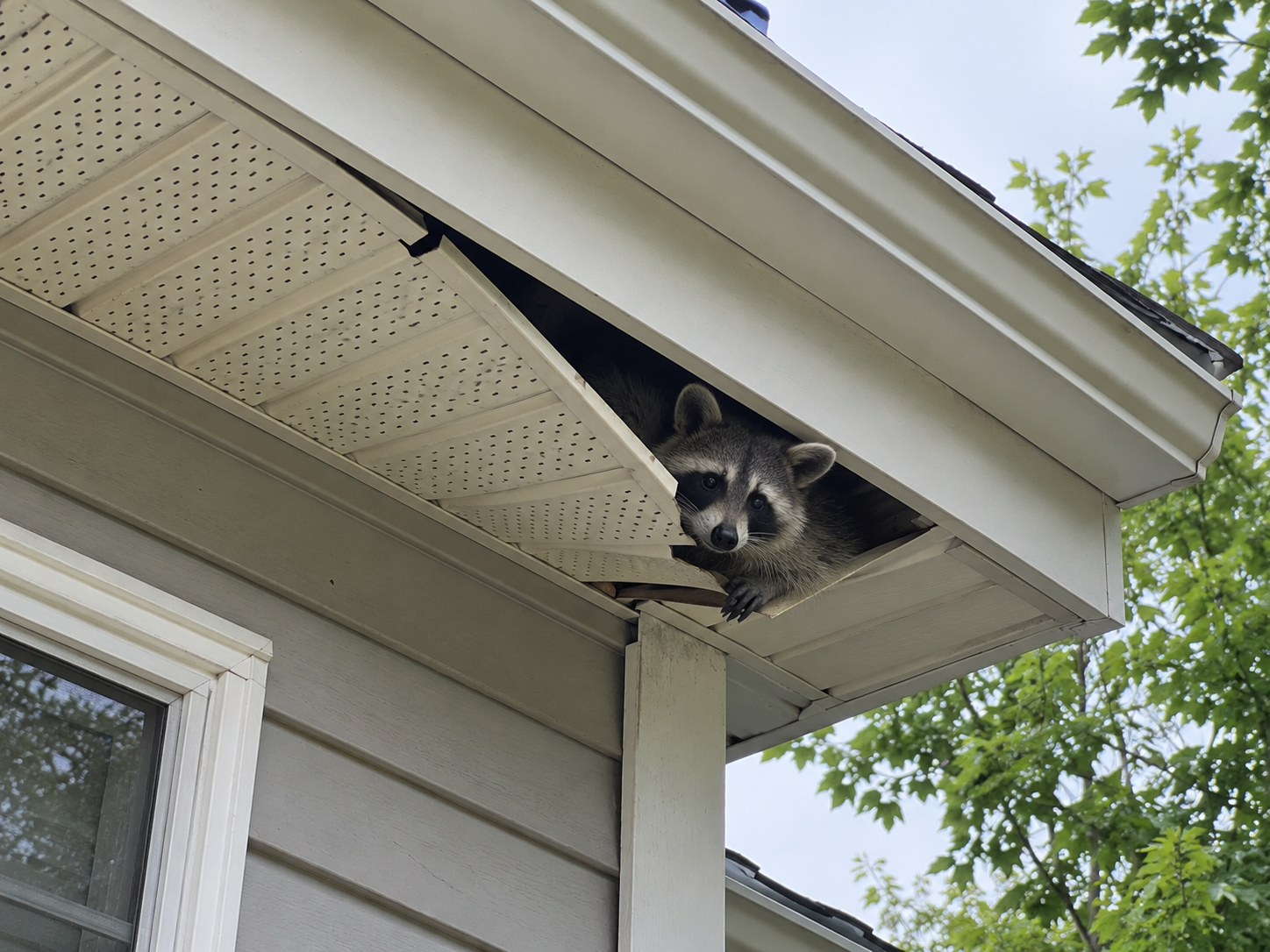
Raccoons tearing at shingles, leaving droppings on a deck, or knocking over trash bins can turn a quiet night into a real headache. If you are hearing thumping in the attic, seeing tracks near vents, or noticing torn openings around the roofline, the problem is likely bigger than a stray animal passing through.
Evict A Pest Wildlife and Pest Control helps homeowners across Cincinnati, OH remove raccoons, close off access, and address the conditions that brought them close to the house. We focus on the source of the problem so you are not left dealing with the same animal activity again a few weeks later.
Raccoon problems
Raccoons are strong, intelligent, and persistent. Once they find shelter, food, or an easy route into a structure, they tend to return. Attics, crawl spaces, chimneys, roof gaps, and damaged soffits are common targets because they provide warmth, shelter, and safety for nesting.
What starts as a noise complaint can quickly become a property issue. Raccoons can tear insulation, damage vents, leave waste behind, and widen entry points while trying to move around a structure. If young are involved, activity can continue for longer than expected, and the animal behavior often becomes more noticeable at night.
Signs to watch
- Heavy movement overhead after dark
- Scratching or thumping sounds from the attic
- Damage near roof edges, vents, or chimney openings
- Tracks, droppings, or torn trash around the property
- New smells that suggest waste or nesting activity
How we remove raccoons
Our raccoon removal approach is centered on finding where the animal entered, how it is moving through the structure, and what needs to be closed off to keep it from coming back. At Evict A Pest Wildlife and Pest Control, we do not treat raccoon control as a simple trap-and-leave job. We look for the route, the conditions, and the weaknesses that made the space attractive.
That often means combining removal with exclusion and repairs. If an animal has already caused damage, simply removing it does not solve the issue. Openings must be closed, weak areas reinforced, and access points corrected so the structure is no longer an easy target.
Our focus
- Inspection: We identify signs of raccoon entry, nesting, travel routes, and activity around the structure.
- Removal: We work to remove the raccoon using methods suited to the situation and the animal’s location.
- Exclusion: We close off access points that could allow re-entry.
- Repair: We address damaged openings, loose materials, and vulnerable areas.
- Prevention: We suggest practical changes that make the property less inviting going forward.
Entry points
Raccoons rarely invent a new way into a home when an easier one already exists. They often use existing weaknesses that may have been overlooked for months. A loose roof edge, uncapped chimney, broken vent cover, or opening near the soffit can be enough for a raccoon to get inside.
That is why our work starts with tracing the path. Once we know where the animal got in, we can focus on closing that route instead of chasing the symptoms. This is one reason raccoon removal and exclusion are so closely connected.
Common access areas
- Roof edges and loose flashing
- Attic vents and gable openings
- Chimney openings
- Soffits and fascia gaps
- Openings created by chewing, prying, or storm damage
What to do first
If you suspect raccoons, it helps to avoid sealing the wrong opening before the animal is out. Closing an entrance too early can trap the problem inside and make the situation more complicated. It also helps to limit the ways the raccoon can get food or become more active around the house.
Until help arrives, keep pets away from the area, avoid touching droppings, and do not reach into openings or nesting spots. Raccoons can defend themselves when cornered, and waste can create an unhealthy mess that should be handled carefully.
Helpful first steps
- Stay clear: Do not approach the animal or try to scare it out by hand.
- Protect access areas: Keep children and pets away from roofline gaps, decks, and suspected nesting zones.
- Cut off attractants: Secure trash and remove easy food sources near the house.
- Call for help: Schedule an assessment so the removal plan matches the situation.
Cleanup and damage
Raccoon activity often leaves behind more than noise. Insulation can be torn apart, duct openings may be disturbed, and waste can collect where the animal nested. That damage does not just look messy. It can also keep the space smelling strong and make it less suitable for use until it is addressed.
Our work is aimed at more than removing the animal. We look at what was disturbed so the property can be restored and the entry path can be closed. The goal is to leave you with a cleaner, safer, more secure result than a simple removal alone would provide.
Why rodenticide-free matters
While raccoon control is different from mouse or rat control, our overall wildlife approach reflects the same principle: solve the source without relying on shortcuts that create other risks. We are rodenticide-free in our mouse and rat programs, and we apply that same practical, long-term mindset to wildlife work.
For raccoons, that means removal, exclusion, and repair rather than repeated visits built around the same unresolved opening. It also means looking at the bigger picture, including waste, attractants, and shelter points that may bring wildlife back to the structure.
Local service area
We handle raccoon removal for homeowners throughout Cincinnati, OH and nearby communities such as Madeira, Hyde Park, Indian Hill, Montgomery, Blue Ash, Mariemont, Terrace Park, Loveland, Milford, and Mason. If you are hearing movement overhead or seeing raccoon activity around the property, we can help assess the situation and recommend a practical next step.
Because we are an independent local company, we keep the focus on solving the problem at the source rather than pushing ongoing service plans you do not need. If you want raccoon removal done with a long-term outcome in mind,
Evict A Pest Wildlife and Pest Control is ready to help.
Common questions
How do I know if raccoons are inside the attic?
Heavy movement at night, thumping overhead, and repeated scratching around the ceiling are common clues. You may also notice torn roof edges, loose vents, or droppings near access points.
Can raccoons come back after removal?
They can if the opening stays available or if attractants remain nearby. That is why exclusion and repair matter just as much as removal.
What attracts raccoons to a house?
Shelter, food, and easy access are the biggest draws. Trash, uncovered pet food, open gaps, and quiet nesting spots can all make a property more appealing.
Should I seal an opening once the raccoon leaves?
Not until you are sure the animal is out and the access point has been assessed. Sealing too early can trap the problem inside the structure.
Do raccoons leave damage behind?
Yes. They can tear insulation, disturb vents, widen weak spots, and leave waste or nesting debris behind.
What makes your approach different?
We focus on removal, exclusion, and source control rather than temporary fixes. That gives homeowners a better chance at a lasting result without recurring animal activity.